In cities like Mumbai, space does not disappear overnight. It slowly gets tighter, more expensive, and harder to use. Buildings grow taller, cars increase, and yet the land stays the same. Somewhere in this everyday chaos sits a problem most people complain about but very few attempt to solve seriously. Parking and the growing need for smart parking solutions.
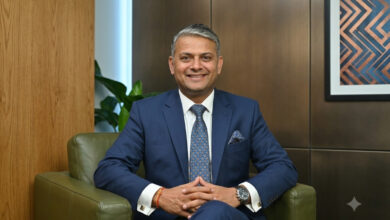
Aalekh Chandan did not approach this as a surface level inconvenience. For him, it became a deeper engineering question. How do you fit more vehicles into the same piece of land without breaking the structure, the usability, or the experience?


As the Managing Director of Expert Parking Systems Pvt. Ltd., Aalekh has spent years working on this exact challenge. His work is not loud or flashy, but it sits quietly inside residential complexes, commercial buildings, and dense urban pockets where every square meter matters.
The company, established in June 2013, operates largely across the Mumbai Metropolitan Region, delivering automated parking systems and mechanical parking systems for residential and commercial developments. From the beginning, the focus has been clear. Do not treat parking like a basic add on. Treat it like infrastructure that needs to evolve with the city.
Instead of offering standard solutions, Aalekh and his team engineer customised car parking systems for buildings for every project. They study how the building is designed, how vehicles will move, and how much space is actually usable. Then they build a system around it. This approach has helped them create parking setups that are not just efficient but also practical for everyday use.
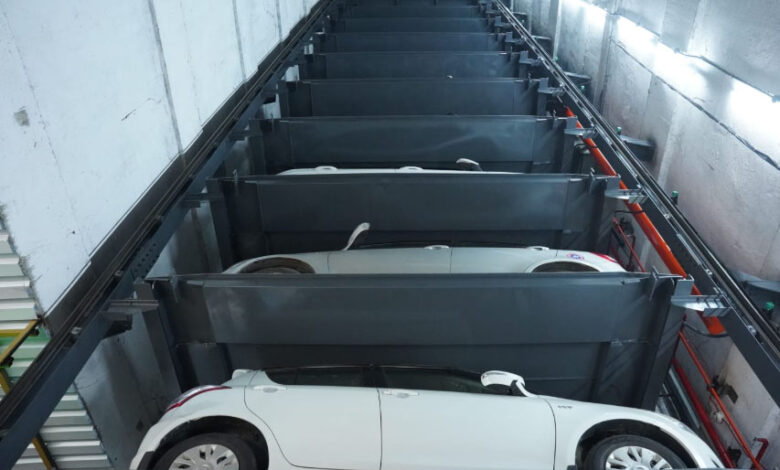
One of the more interesting outcomes of this thinking is their Machine Room Less tower parking system, a form of multilevel car parking system. Traditional tower systems require a separate space just to house the machinery. In a city where space is already scarce, that extra requirement becomes a problem. By removing the need for a dedicated machine room, the company has managed to create a solution that fits into tighter layouts while still increasing parking capacity.
Another innovation that stands out is the suspended no post parking system within advanced mechanical parking systems. Most mechanical setups rely on ground level posts which can make movement difficult and reduce usable space. By engineering a structure that shifts the load to the building framework, the ground area becomes more open. This makes a noticeable difference, especially as vehicles continue to get larger.
What makes these solutions relevant is not just the engineering behind them but the context in which they are being built. Cities like Delhi, Bengaluru, and Pune are all moving in the same direction as Mumbai. More people, more vehicles, and less room to accommodate both, increasing the demand for automated parking solutions in India.
For developers and architects, this creates a constant trade off between design, capacity, and compliance. For housing societies and institutions, it turns into a daily struggle of managing limited parking without creating friction.
Aalekh sees this as a long term shift in how urban infrastructure will need to evolve. As urban development becomes denser, automated parking systems and smart parking technology will move from being an optional feature to something that is expected.
Expert Parking Systems is not trying to reinvent cities overnight. The work is slower than that. It is project by project, structure by structure, solving for real constraints that exist on the ground.
In a country where infrastructure conversations often focus on roads, transport, and housing, parking management systems rarely get the same attention. But without solving it, the rest starts to feel incomplete.
And that is exactly where Aalekh Chandan continues to work. Not at the surface, but at a level where thoughtful engineering decisions can quietly change how a city functions.